Human research
Human evidence must name the population, endpoint, follow-up period, safety findings, and limits. Biomarker movement is not treated as proof of longer life or better health.
Public research journal
This program tracks longevity research without turning early signals into health advice. Its work is to separate evidence, research leads, open questions, and safety limits so each claim can be judged on its source.
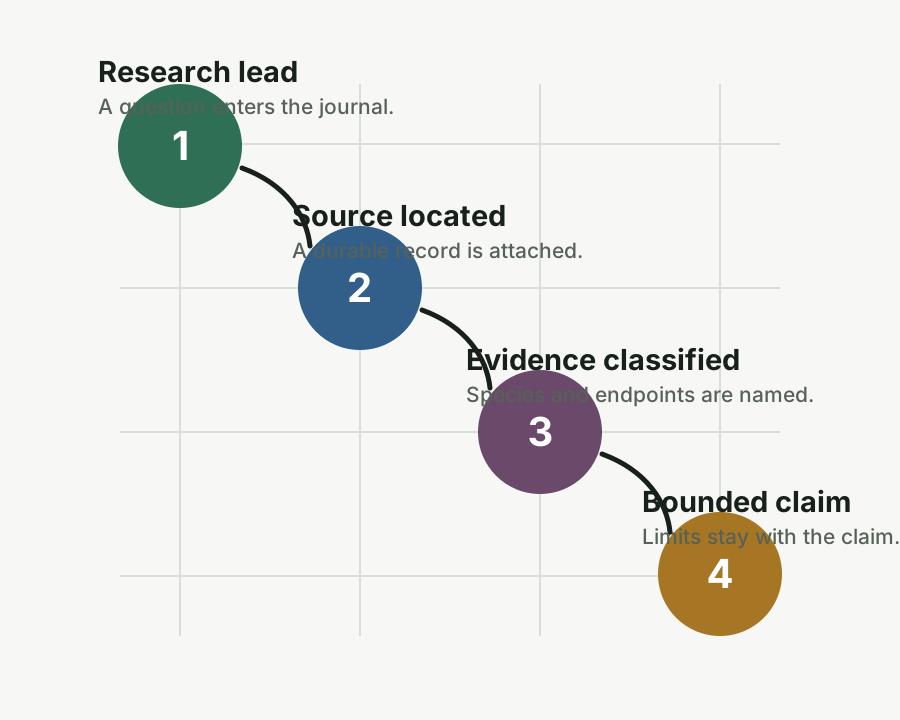
The current public journal includes program-derived research leads and a small seed register. Those leads are not treated as established findings until durable sources are located, read, classified, and tied to a bounded claim.
Purpose
The long-term research horizon is indefinite healthy lifespan for humans and domestic dogs. The current work is narrower: build a public record that shows what is known, what is merely plausible, what is unsupported, and what would need to be tested next.
No intervention on this site is presented as proven to extend human or canine lifespan. When an item comes from the working journal, it stays a research lead until the source record and evidence limits are complete.
Research boundaries
Human evidence must name the population, endpoint, follow-up period, safety findings, and limits. Biomarker movement is not treated as proof of longer life or better health.
Dog evidence must stay dog-specific whenever possible. Veterinary records, mobility, cognition, frailty, activity, quality of life, adverse events, and lifespan are kept apart.
Mouse, fly, worm, cell, and ex vivo results can support hypotheses. They do not become human or dog claims without a clear bridge and a reason to trust the endpoint.
Evidence journal
A possible mechanism, finding, intervention, or contradiction has entered the journal.
A durable paper, trial record, dataset, correction, or authoritative record has been found.
The species, model, endpoint, duration, effect, safety notes, and limits have been recorded.
The item can be used only for the specific claim the evidence supports, with its limits attached.
Current map
Next work
The immediate work is to attach durable sources to the seed register, classify each item by species and endpoint, and mark which questions are still research-required.
This site is not medical advice, veterinary advice, diagnosis, treatment, or a recommendation to start, stop, or change any intervention. Health decisions belong with qualified clinicians and veterinarians who know the person or animal involved.